

Introduction
Neurodegeneration is a broad term describing medical conditions characterized by a progressive failure of neuronal networks, ultimately leading to the death of neurons involved in motor, sensory, and cognitive functions. Neurodegenerative disorders (NDs), including Parkinson’s disease (PD), Huntington’s disease (HD), Alzheimer’s disease (AD), and others, are complex and multifactorial conditions that pose a major threat to human health. Currently, there are no specific diagnostic tests or fully effective treatments.
As the number of cases increases rapidly worldwide, the World Health Organization predicts that neurodegenerative diseases will surpass cancer as one of the leading causes of death by 2050. This growing burden places significant socio-economic pressure on healthcare systems and prompts governments to develop strategies to mitigate the impact.
From a pathophysiological perspective, multiple mechanisms contribute to neurodegeneration. These include abnormal accumulation of aggregation-prone proteins, dysfunction of the ubiquitin–proteasome system and the autophagy–lysosomal pathways, dysregulation of apoptosis and autophagy, disrupted glutamate transport, calcium imbalance, oxidative stress, and mitochondrial dysfunction. Together, these mechanisms demonstrate that neurodegenerative diseases arise from a complex interaction of genetic and environmental factors, in which each gene, individually or in collaboration, can contribute to the disease picture.
Studying gene function often requires disrupting gene expression. Traditional methods such as RNA interference (RNAi) and homologous recombination (HR) are widely used. RNAi is a rapid, cost-effective, and large-scale technique for gene silencing, applied in cell lines, primary cultures, and animal models. It was once considered the gold standard for gene silencing.
However, RNAi has several limitations: (1) difficulty introducing multiple genes simultaneously in vivo or in vitro, (2) variable and incomplete or transient effects, (3) inability to generate stable knockouts or precise epigenetic modifications, and (4) possible off-target effects. These disadvantages limit clinical applicability.
Homologous recombination in mouse embryonic stem cells is another widely used strategy for generating genetically modified animal models. However, this method is time-consuming, inefficient, and can cause unwanted mutations.
Recent developments in gene-editing technologies such as zinc-finger nucleases (ZFNs), transcription activator-like effector nucleases (TALENs), and CRISPR/Cas systems have significantly accelerated biomedical research. These techniques enable the creation of disease models and offer potential therapeutic approaches for previously untreatable diseases. This review focuses on PD, HD, and AD and discusses how gene-editing technologies are being applied to these conditions.
General neurodegenerative diseases
Parkinson’s disease (PD)
Parkinson’s disease is an age-related, progressive neurodegenerative disorder that primarily affects motor function. It is characterized by tremor, rigidity, and bradykinesia. The prevalence is estimated at more than 1% in individuals aged 60 and older and rises to approximately 4% in people over 80 years of age. Regional differences in prevalence exist worldwide.
Symptoms only appear after significant neuronal loss; often, more than 70% of the dopaminergic neurons in the substantia nigra are already damaged or missing at diagnosis. As the disease progresses, patients may develop dementia and hallucinations.
Pathologically, PD is characterized by degeneration of neurons in the substantia nigra and the presence of Lewy bodies consisting primarily of aggregated alpha-synuclein (SNCA). Genetic factors play a significant role, with at least 13 loci and multiple genes involved. Familial PD accounts for 5–10% of cases and can be inherited in an autosomal dominant or recessive manner.
Important genes are SNCA and LRRK2 (dominant forms), and Parkin, PINK1, DJ-1, and ATP13A2 (recessive forms). Although symptomatic treatments exist, there is currently no curative therapy available.
Huntington’s disease (HD)
Huntington’s disease is a rare, autosomal dominant neurodegenerative disorder. The prevalence varies worldwide but remains low. The disease usually begins between the ages of 30 and 50.
HD is characterized by motor disorders (chorea, dystonia, bradykinesia), cognitive decline, psychiatric symptoms, and progressive loss of independence, ultimately leading to death 15–20 years after the onset of the disease.
Genetically, HD is caused by the expansion of CAG repeats in the Huntingtin gene (HTT), leading to toxic polyglutamine-expanded proteins. A DNA test can detect this mutation. Animal studies show that complete absence of HTT is embryonally lethal, highlighting the essential role of this gene in development.
Currently, there is no cure for HD.
Alzheimer’s disease (AD)
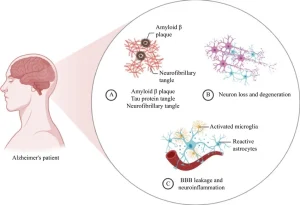
Alzheimer’s disease is the most common cause of dementia and a progressive neurodegenerative disorder. It primarily affects the elderly, with a sharp increase in prevalence with age.
The disease is associated with multiple pathological mechanisms, including:
- Accumulation of amyloid-β (Aβ) derived from amyloid precursor protein (APP)
- Tau hyperphosphorylation and formation of neurofibrillary tangles
- Neuroinflammation and gliosis
- Oxidative stress
- Synaptic and neuron loss
- Neurotransmitter imbalance
- Genetic factors such as APOE
Clinically, AD begins with short-term memory loss and progresses to global cognitive decline and brain atrophy. There is no curative treatment.
Principles of gene-editing tools
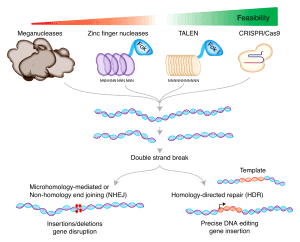
Gene editing relies on two components: DNA-binding domains (DBDs), which recognize specific sequences, and DNA-cutting domains (DCDs), which cut DNA. This causes double-strand DNA breaks (DSBs), which activate cellular repair mechanisms:
- Non-homologous end connection (NHEJ), error-prone and can cause insertions or deletions
- Homology-driven repair (HDR), which uses a template for accurate repair
NHEJ often leads to gene knockouts, while HDR enables precise genetic correction. The activity of these pathways depends on the cell cycle phase.
Zinc-Finger Nucleases (ZFNs)
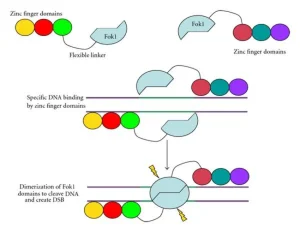
ZFNs are engineered proteins that combine zinc-finger DNA-binding domains with the FokI nuclease. They were the first widely used gene-editing tools.
Each zinc finger recognizes approximately 3 base pairs of DNA, and multiple fingers combine to target specific sequences. ZFNs can cause mutations, deletions, insertions, and translocations.
However, their design is complex, time-consuming, and often inefficient. Nevertheless, ZFNs are applied in disease models and therapeutic research, including the correction of mutations in PD, HD, and AD models.
TALENs
TALENs are based on transcription activator-like effectors (TALES) coupled to FokI nucleases. Each TALE repeat recognizes one DNA base, enabling highly specific targeting.
TALENs are simpler to design than ZFNs and have higher efficiency. They are used in animal models, stem cells, and research into human diseases such as PD, HD, and AD.
However, their large size can complicate cellular delivery.
CRISPR-Cas systems
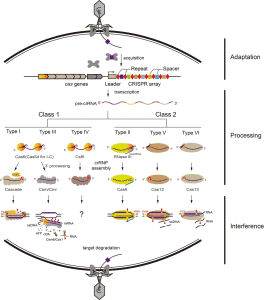
CRISPR/Cas is a revolutionary gene-editing technology originating from bacterial adaptive immune systems. It uses guide RNA (gRNA) to direct Cas nuclease to specific DNA sequences.
The system works in three steps:
- Adaptation: integration of foreign DNA sequences as spacers
- Expression: transcription and processing into crRNA
- Interference: cutting of target DNA
Cas9 is the most widely used nuclease and causes DSBs at specific sites. CRISPR systems are simpler, cheaper, and more versatile than ZFNs and TALENs, and enable multiplex gene editing.
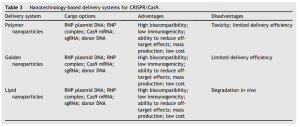
Despite advantages, there are limitations such as off-target effects, dependence on PAM sequences, and variable delivery efficiency.
Applications in disease models
ZFNs
ZFNs have been used to correct mutations in PD patient-derived stem cells and to reduce the expression of mutant HTT in HD models. In vivo studies show improvement in neurological functions after genetic correction.
TALENs
TALENs have been used to create and correct disease models in PD, HD, and AD, including correction of HTT mutations and modulation of APP-related pathways.
CRISPR/Cas
CRISPR has made it possible to create complex PD and HD models, correct disease-causing mutations, and regulate gene expression. It is widely used in stem cell and animal models and is considered the most versatile gene-editing technology.
Conclusion
Neurodegenerative diseases such as PD, HD, and AD are complex conditions influenced by genetic and molecular dysfunctions. Gene-editing technologies offer powerful tools to study these diseases and develop potential therapies.
ZFNs and TALENs have paved the way for targeted gene editing, but require complex design and optimization processes. CRISPR/Cas has revolutionized the field thanks to its simplicity, efficiency, and ability to target multiple genes simultaneously.
Nevertheless, challenges remain, such as off-target effects and delivery limitations. Further improvements in gene-editing technologies are essential to better understand neurodegeneration and ultimately develop effective treatments for these currently incurable diseases.